Plastic crates and bulk bins in Arizona
In Arizona the first request is usually vented produce crates and bulk bins for Yuma's winter lettuce, then totes and collapsibles for Phoenix and Tucson warehouses and the vehicle work at Casa Grande. We quote new, used and refurbished containers to Arizona addresses and price the truck on every load.
- Top crops
- Romaine, head and leaf lettuce
- Winter greens
- Yuma County, about 90% Nov to Mar
- Vehicle plant
- Lucid AMP-1, Casa Grande
- Main interstates
- I-10, I-8, I-17, I-40, I-19
- Cities
- Phoenix, Tucson, Yuma
Lettuce season in Yuma
Yuma County is credited with about 90% of the leafy vegetables grown in the US from November to March. USDA NASS figures back the picture: romaine, head lettuce and leaf lettuce were three of Arizona's top four crops in 2025, worth about $526 million, $433 million and $201 million in value of production.
Leafy greens are cut, packed and cooled fast. Harvest crews and cooling sheds want produce crates with a vented wall for forced-air or vacuum cooling, and bulk bins for cores, trim and product headed to a fresh-cut plant. Crates should nest or fold so the empty trip back to the field is cheap.
Cooling method changes the crate. Hydrocooling soaks the load, so walls must drain and floors must not pool water. Vacuum tubes pull air through the carton or crate, which favors wide slots on every face. Forced-air tunnels need vents lined up when crates are stacked, otherwise cold air bypasses the product. Tell us which method the shed runs and we'll shortlist crates whose vent pattern suits it.
A border and cross-state trucking hub
Yuma is an important trucking station for freight moving between California, Arizona and Mexico. I-8 links it to San Diego and back east to I-10 near Casa Grande, and I-10 crosses Phoenix and Tucson on its way to Texas. I-19 runs south from Tucson to Nogales, and I-17 climbs north to Flagstaff and I-40.
For buyers, that means a seasonal crate order to Yuma may share a truck with produce traffic, while a Phoenix warehouse order rides general freight lanes. Small orders go LTL on pallets. If you need more than a couple of hundred crates, or any quantity of bins, a dedicated trailer usually prices better per unit. Read how ordering works for the steps.
Who orders what in Arizona
| Buyer | Container | Footprint |
|---|---|---|
| Lettuce and leafy-greens growers | Vented produce crates, collapsible crates | 600x400 mm, 24x16 |
| Fresh-cut and cooling sheds | Bulk bins, nest-stack totes | 48x40 |
| Dairies and dairy plants | Stacking crates, attached-lid containers | Hand-held |
| Vehicle and parts suppliers (Casa Grande) | 48x45 collapsibles, euro containers, dunnage | 48x45, 600x400, 400x300 mm |
| Phoenix and Tucson DCs | Nest-stack totes, 48x40 collapsibles | 48x40, hand-held |
Vehicle parts at Casa Grande
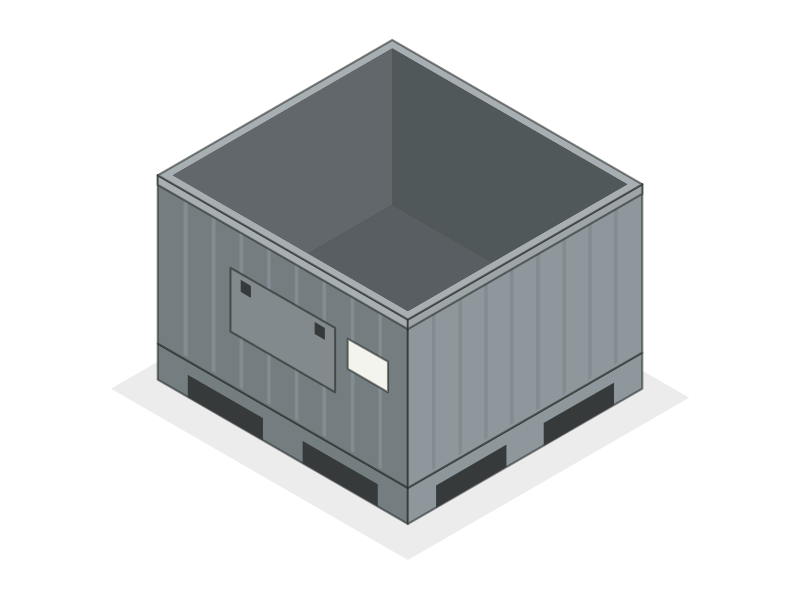
Lucid builds vehicles at its AMP-1 factory in Casa Grande. Battery and body parts are heavy and bulky, so suppliers on this kind of program often specify the 48x45 bulk footprint with a drop door for line-side picking, plus custom dunnage. ORBIS lists its 48x45 BulkPak in 17 versions from about 19 to 50 inches tall, so give us the height your racking allows.
Smaller parts tend to run in euro-style hand-held bins. Tell us the outside size in millimeters and whether lids, labels or color matter.
Dairy and heat
Arizona had about 195,000 milk cows on January 1, 2026 and produced 4.76 billion lb of milk in 2025. Dairies and processors buy stacking crates and lidded containers for packaged product and parts. Desert heat matters for plastic left outside: ask about UV-stabilized resin, and store empties out of direct sun when you can.
Phoenix and Tucson warehouse work
Warehouses around Phoenix sit on the I-10 and I-17 corridors, and their pick lines usually run on hand-held nest-stack totes: the empty tote drops inside the one below it, so a return pallet takes a fraction of the space. Where totes travel between buildings and must stay closed, buyers choose attached-lid containers with hinged flaps that interleave and take a zip tie or seal.
Where heavier freight is involved, from Tucson to the Phoenix suburbs, parts travel in collapsible bulk containers on a 48x40 base. Flexcon, for example, lists a 48x40x30 folding container rated about 1,700 lb with an 89 lb tare and four-way forklift entry. Measure your dock plates and pallet racks before choosing a height; a box that clears the rack beam with a few inches spare is the one to buy.
Selling crates after the season
When a grower changes packing formats or a warehouse closes a pick line, we buy the surplus. Send count, size, condition, location and what the containers held. Produce crates sell better when they are clean and stacked. Begin at sell totes and crates.
Questions
Do you quote crates for delivery to Yuma before the winter season?
Yes. Send the count and the date you need them; we'll quote the freight and tell you what the carrier can offer, but we don't promise dates.
Are used produce crates safe for lettuce?
We never call them food-grade. Ask for the maker's documents, tell us what the crate held before, and have your food-safety lead decide.
Will plastic bins warp in Arizona sun?
Heat and UV age most plastics. Many makers offer UV-stabilized resin; we quote the maker's statement on it when they give one.
Can you ship crates to a field address in Yuma rather than a warehouse?
Usually, yes. Give the carrier a gate location, a contact on site and the equipment available for unloading; open-deck trucks or liftgates can be arranged where the ground allows.
Sources
Figures on this page come from these pages, last reviewed 2026-11-08. Makers update their sheets; confirm a model's figures on its current sheet before you order.