Plastic crates and bins for distribution and 3pl
Distribution centers and 3PLs run automation totes for AutoStore grids, shuttles and conveyors, stack-nest picking totes, attached-lid containers for store and customer deliveries, and collapsible bulk containers on 48x40 for inbound and cross-dock freight. In an automated building the tote is a machine part: its base, walls and tolerances decide whether it runs or jams.
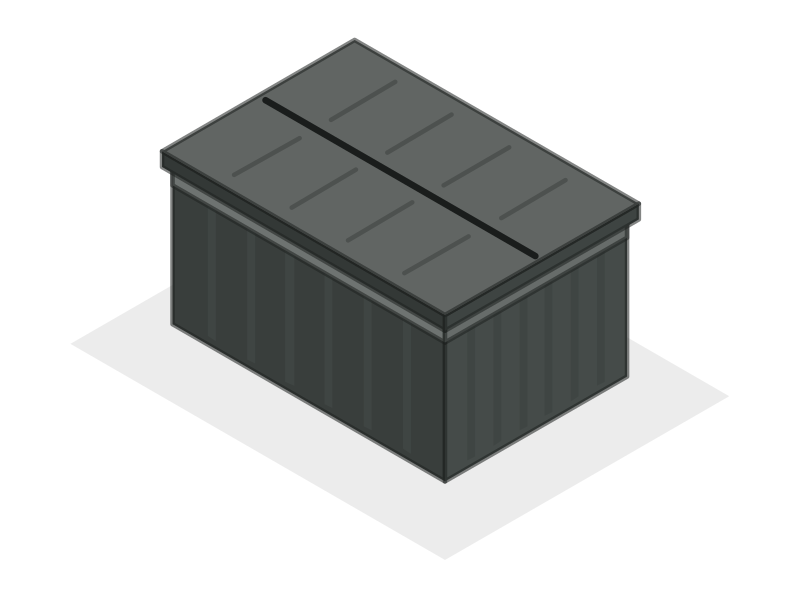
- Containers
- AutoStore bins, conveyor totes, stack-nest totes, attached-lid containers, 48x40 collapsibles
- Footprints
- 649 x 449 mm grid bins, 600x400 mm, 21x15, 48x40
- What goes in
- Each-pick inventory, ecommerce orders, store replenishment
- Rules to know
- Your system maker's tote spec; fire rating if your sprinkler design calls for it
One tote, many machines: how containers move in a DC
Cases arrive, are opened at a decant station, and the units go into storage totes. A grid robot, shuttle or conveyor brings the tote to a picker, who pulls an order into a second tote bound for packing or a store. Outbound store totes leave lidded and come back empty and nested. Each step touches the container, and the more automated the building, the less forgiving it is of a warped base or a scuffed side.
MMH reported in December 2025 on a footwear DC where one tote goes from AS/RS through picking to packing, travelling up to 40 mph in vertical shuttles. Totes in that kind of building are molded for precise dimensional consistency so conveyors, shuttles and robots handle every one the same way.
Between machines, people still push carts. Dollies sized to a tote's base let a packer roll a column of six or eight to the dock without a pallet jack; ORBIS sells lids and dollies for footprints including 21x15, 24x15 and 24x20, though it notes not every option fits every model. Check caster ratings and whether the dolly's corner posts clear your tote's handholds.
Totes and bins for a modern DC
| Container | Used for | Footprints | Notes |
|---|---|---|---|
| AutoStore bin | Grid storage and robot picking | 649 x 449 mm top | ORBIS AS6545-330: 312 mm inside height, 4.4 kg, 1,200 per 53-ft trailer. |
| Automation tote | Conveyors and shuttles | 6545 class | Rehrig builds barcode and RFID tag placements into its 6545 x 325 tote. |
| Stack-nest tote | Picking, replenishment, returns | 600x400 mm (23.6 x 15.8 in.) | ORBIS GS6040 runs 5.3 to 14.3 in. tall; nest ratios up to 4:1. |
| Large stack-nest tote | Bulky each-picks | About 29x19 | Buckhorn SN29191002: 100 lb capacity, 840 stacked or 3,060 nested per 53-ft truck. |
| Attached-lid container | Store and pharmacy deliveries | 21x15 | ORBIS FP182: 800 lb static load, 3,600 per trailer, holes for security ties. |
| Collapsible bulk container | Inbound, cross-dock, returns | 48x40 | ORBIS GP4048-34: 2.7:1 return ratio, two access doors on the 40-in. side. |
Tolerances, labels and fire rating
Automation totes have rules that a warehouse shelf tote never meets. In MMH (December 2021), Quantum Storage's Ed Granger said they should be flat on the bottom and proportioned so that "The length must be at least equal to the height", and tough enough to survive chute landings. ORBIS pointed to drain holes, reinforced bottoms and smooth walls that let sensors read the tote cleanly.
Fire codes reach totes too. In the same article Flexcon said it used tote materials that "met their fire rating specs", which saved one customer millions on fire suppression. If your sprinkler design assumes a rated container, give us that rating before anything else; it narrows the field fast. Akro-Mils, also in that piece, described building totes for a 1-million-square-foot DC with more than 1 million storage compartments.
Cleaning in a DC is mostly about debris and labels. Old pick labels, tape and shrink-wrap scraps can confuse scanners and catch on conveyor transfers, so strip them before totes re-enter a system. Grocery ecommerce totes that carry fresh food need a wash program and the maker's food-contact wording on file.
New totes for the grid, used totes for the floor
For an AutoStore grid or shuttle system, buy what the system maker specifies, and buy new unless a used lot comes from the same system and model. Bins that ran in another building can carry wear you can't see from a photo: bowed bases, worn stacking lips, scuffs on sensor faces. We tell you the model, the source and its letter grade, and you check one sample against your own tolerances before the rest ship.
On manual floors the bar is lower and used totes make sense. For store returns, the choice is between stack-nest totes, which ORBIS says nest at ratios up to 4:1 and stack when turned 180 degrees or lidded, and attached-lid containers, which ORBIS says nest open to cut empty return footprint by up to 75% and never lose a cover. Attached lids also take security ties, which matters for pharmacy and high-value lines.
Labels and tags: Rehrig molds placements for barcodes and RFID; on used totes, check that old labels come off cleanly and that any tag pocket is intact.
After a system changeover
A new grid, a new conveyor width or a lost client contract can leave a 3PL with thousands of idle totes. We buy surplus totes and collapsibles. Send the model, count, condition, any labels or tags left on, and the building address. DC corridors in New Jersey, Pennsylvania and Illinois have their own pages. See sell totes and crates.
Questions
Will these totes run on our conveyor, shuttle or AutoStore grid without jamming?
Only a tote built to your system's spec will, so start there. Send the system maker's tote requirements and we quote models that match, then test a sample.
Do you have bins that meet our AS/RS tolerances, new or used?
New, yes, by model. Used, only when a lot comes from the same model and you approve a sample against your tolerances.
Stack-nest or attached-lid: which saves more on empty returns from stores?
Both nest empty. Compare the maker's return ratio for each model; attached-lid totes add a cover that can't go missing and take security ties.
Can totes carry barcode labels or RFID tags?
Many automation totes have molded label and tag areas. Tell us your tag type and placement and we check the model sheet.
Will you buy our surplus totes after a system changeover?
Yes. Model, count, condition and location are enough to start.
Sources
Figures on this page come from these pages, last reviewed 2026-11-08. Makers update their sheets; confirm a model's figures on its current sheet before you order.