Used plastic crates
Used plastic crates are retired working stock: boxes a plant, grower or distributor no longer needs after a program ends, a line changes or a count runs over. We quote used lots by what you can see and measure, name the grade, and send photos of the actual boxes before you agree to anything.
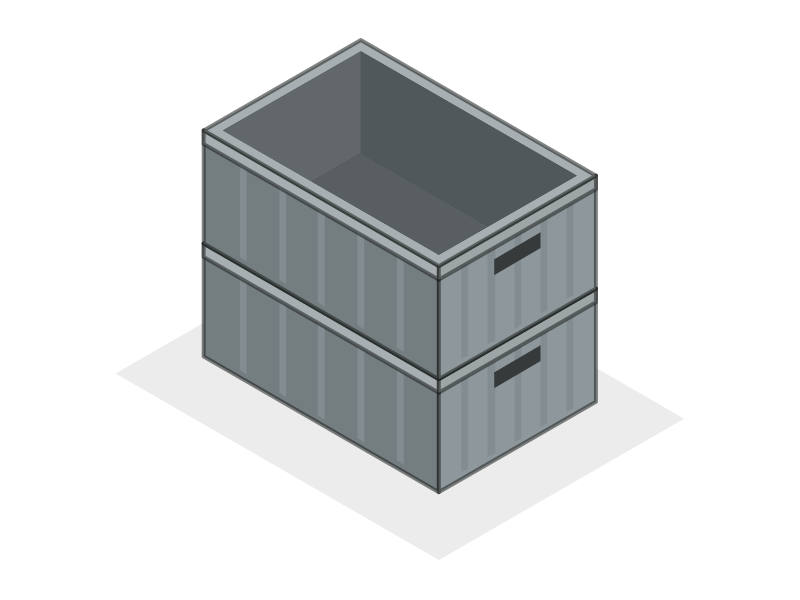
- Typical sources
- Retired programs, line changes, surplus
- Graded
- A, B or C, stated per lot
- Photos
- Of the lot itself, before you confirm
- Food contact
- History and maker papers, never assumed
Where used crates and totes come from
Retired programs. An automotive part goes end-of-life, a retailer switches suppliers, or a returnable loop closes. The packaging built around it is suddenly idle, often hundreds of identical units with the same marking.
Line changes. A processor moves to a new conveyor, a new case pack or a different footprint. The old totes still work; they just don't fit the new equipment.
Surplus. Someone ordered too many, merged two warehouses, or found a pallet stack in the back that nobody counted. Surplus lots are often light use, sometimes never filled.
Knowing which of these produced a lot tells you a lot about it. A retired program usually means matching boxes with similar wear. Surplus can mean near-new. A cleanout can mean three makers stacked together.
Grades in one line
We grade every used lot A, B or C and say what that letter means for that box, with photos. Buyers stocking a parts cage, a backroom, a nursery bench or a seasonal overflow area often find a B lot does the job at a lower cost than A, since scuffs and faded color don't change how a crate carries weight. The full breakdown of each grade, and what moves a crate from one to the next, is on our used container grades guide.
What to check on a used crate
Ask for close-up photos of the spots below, or check them on arrival. Most failures start in the same few places, and a quick look sorts a sound crate from one that will split under its first full load.
- Rims. The top edge carries the crate above. Look for chips, whitening (stress marks) and warping that keeps the next crate from seating.
- Handles. Hand-hold slots crack from the corners outward. A crack you can fit a fingernail into will grow.
- Corners. Dropped crates break at the base corners first. Check the inside and the underside.
- Floor. Press the middle of the deck. Flex is normal; a soft spot or star crack is not.
- Nesting fit. For nest-stack totes, try two together. A warped wall stops them nesting and wastes space on the return trip. See nestable vs stackable.
- Stacking fit. Stack three loaded crates. They should lock without rocking.
- Labels and hot stamps. Old owner names, barcode plates and molded logos. Fine for internal use; a problem if the crate will go out to customers or back into someone else's returnable pool.
Old markings and ownership
Many returnable crates are stamped with an owner's name, and some are pooled assets that were never meant to be sold. We ask the seller where a lot came from and won't quote boxes that look like someone else's pool stock. Hot stamps can't be fully removed, and paper labels leave residue, so decide early whether visible old branding matters for your use. If it does, a refurbished lot with labels stripped, or new, may be the better fit.
The food-contact question
A used crate's past matters more than its color. We make no food-contact claim for any used container, and we don't guess. Tell us what goes in: bare produce, wrapped product, raw protein, or parts. We then ask the seller what the boxes held before and pass on whatever the maker publishes about the resin.
Crates that carried oil, solvent, chemicals or anything allergen-heavy stay out of food quotes. Crates with a clean produce history may still need washing and your own QA sign-off. Our food contact guide lists the documents a plant usually asks for.
Buying a mixed lot
A mixed lot is several sizes, makers or colors sold together, usually from a cleanout. It can be the cheapest way to fill a stockroom or a farm shed. It is rarely right for a conveyor, a racking system or anything automated.
Ask for a count by type, not a pallet total. Ask whether the types nest or stack with each other; most don't across makers. Plan where the odd sizes will go. If you only need one size, say so: we would rather quote a smaller matched lot than ship you boxes you will throw out.
| Matched lot | Mixed lot | |
|---|---|---|
| Typical origin | Retired program, line change | Cleanout, consolidation |
| Stacks and nests together | Yes | Usually only within each type |
| Works on conveyors | Often | Rarely |
| Best for | Production, shipping loops | Storage, farm, shop use |
Questions
Do you have used crates in stock?
We don't publish stock. Used supply comes and goes lot by lot, so we match your request to what sellers have at the time and send photos of those specific boxes.
Can I see the crates before I buy?
You see photos of the actual lot before you confirm, including close-ups of rims, corners and markings. Ask for any angle you want.
Can used crates go into a food plant?
Only after your own QA review. We don't certify food contact; we report what the crates held before and what the maker publishes, and keep crates with chemical or oil history out of food quotes.
How is freight handled on a used lot?
Each load is quoted separately. The steps, from quote to receiving, are on how ordering works, and trailer sizing is in our trailer loads guide.