Plastic crates and bulk bins in Wisconsin
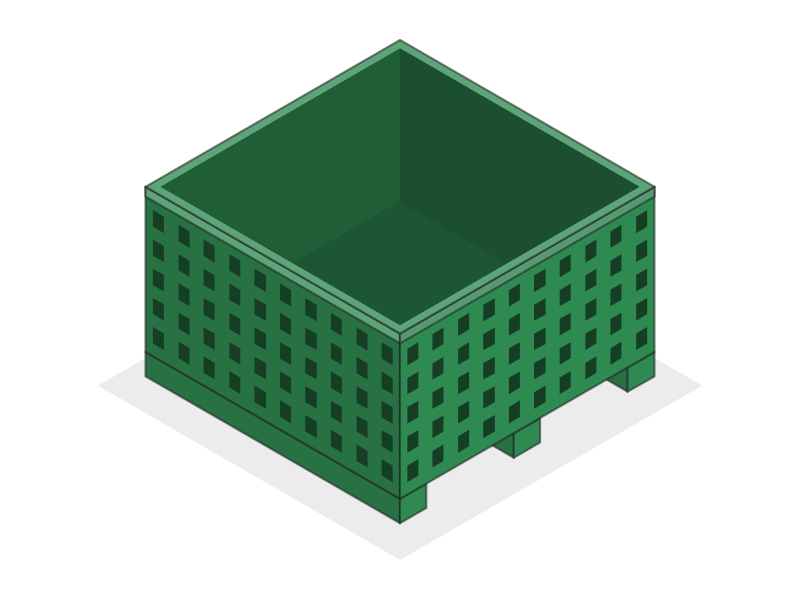
Wisconsin requests start with cheese and dairy plants, which buy block crates, lidded totes and bulk boxes, then move to bins for cranberries, potatoes and processing snap beans. We quote new, used and refurbished containers delivered to Wisconsin addresses, and each load's freight is priced separately.
- Cheese (2025)
- 3.64 billion lb, about 25% of US
- Milk cows
- 1.285 million (Jan 1, 2026)
- No. 1 in the US
- Cheese, cranberries, snap beans for processing, ginseng
- Main interstates
- I-94, I-90, I-43, I-39, I-41
- Cities
- Milwaukee, Green Bay, Madison
Cheese country
Wisconsin cheesemakers make about a quarter of the nation's cheese: 3.64 billion lb in 2025, including about 1.03 billion lb of specialty cheese, according to the state agriculture department. The state had about 1.285 million milk cows on January 1, 2026 and produced about 32.6 billion lb of milk in 2025, worth around $6.81 billion.
Cheese plants use a surprising variety of containers. Curd and fresh blocks move between vats, presses and cooling rooms in smooth, solid-wall bins and tubs. Blocks and wheels age on shelves or in crates for weeks or months. Finished cuts are packed, then shipped in cases, and the trays, dividers and crates that carry them often return for reuse. Specialty makers with many small batches want hand-held stacking crates and lidded totes they can label and track lot by lot.
What a dairy plant checks first
Most cheese plants buy new for direct product contact and use grade A or refurbished containers for packaging, ingredients and maintenance. If you do consider used, tell us what the containers held before and ask the maker for the resin documents. Our food contact guide lists the questions an auditor tends to ask.
- Resin and the maker's food-contact statement; we never call a used container food-grade
- Smooth interior, radiused corners and no ribs that trap whey or brine
- Low-temperature rating for coolers and aging rooms
- Stack strength over long storage, not just in transit
- Drain holes or a solid floor, depending on whether liquid must stay in
- Color coding for allergen, organic or kosher lines
Aging rooms and long-term loads
Plastic under a steady load slowly deforms over time, a behavior engineers call creep. A crate that easily carries a stack for a day on a truck can sag after months holding wheels or blocks in an aging room, especially when the room is humid. That's why makers often publish separate figures for short-term and long-term stacking, and why aging-room buyers should plan around the conservative one.
Shelving changes the picture. Crates on racks carry only their own contents, while crates stacked on the floor carry everything above them. Tell us which way your room works, the weight per crate and the time product stays in storage.
Wisconsin containers by sector
| Sector | Containers | Footprints |
|---|---|---|
| Cheese and dairy processing | Solid-wall bins and tubs, stacking crates, lidded totes | Hand-held, 48x40 |
| Cranberry marshes and receiving stations | Bulk bins, vented crates | 48x40, 600x400 mm |
| Potato growers and storages | Heavy bulk bins, collapsibles | 48x40, about 47x39 |
| Snap bean and vegetable processors | Vented bins, dumpable bulk containers | 48x40 |
| Ginseng growers | Vented crates for drying and handling roots | 600x400 mm |
| Milwaukee and Fox Valley manufacturers and DCs | Collapsible bulk containers, nest-stack totes, dunnage | 48x45, 48x40, hand-held |
Cranberries, potatoes, beans and ginseng
Wisconsin ranks first in the nation for snap beans for processing, cranberries and ginseng, and third for potatoes. Potatoes were worth about $466 million in 2025 and cranberries about $172 million. Each crop has its own container needs.
Cranberries are often harvested wet, floated, then pumped or conveyed to trucks; bins and crates at receiving stations need open floors that shed water quickly. Potatoes need heavy bulk bins with strong floors and runners that stack high in storage. Snap beans for processing must cool and move fast, so processors use vented bins that empty cleanly into a hopper. Ginseng roots are dried and handled carefully; growers use shallow vented crates that let air circulate.
Interstates, the Twin Ports and ordering
I-94 runs from the Illinois line through Milwaukee and Madison toward the Twin Cities. I-90 shares much of that route before splitting toward La Crosse, I-43 follows Lake Michigan from Milwaukee to Green Bay, I-41 links Milwaukee, the Fox Valley and Green Bay, and I-39 heads north from Madison through the center of the state. In the far northwest, the Twin Ports of Duluth and Superior ranked 26th among US ports by 2023 total trade.
A cheese plant restocking a few pallets of crates ships LTL. A potato storage replacing a bin fleet buys by the truckload. Rigid bins fill a trailer with air on the empty leg; folding containers don't. ORBIS lists its 48x40 GP4048-34 at a 2.7:1 return ratio, 240 folded or 90 assembled per 53-foot trailer. Winter weather can shift pickup days, so we quote the freight and the carrier confirms timing.
Selling surplus from Wisconsin
Dairies that change crate models, potato storages that upgrade, and manufacturers that finish a program all have containers to sell. We buy bins, crates, totes and collapsibles in volume. Send count, model, grade, location and what they held. Start at sell.
Questions
Do you quote cheese-aging crates?
Yes. Tell us the block or wheel size, the weight per crate and how high you stack in the aging room, and we'll quote new units whose maker lists the right temperature range and stack rating.
Can cranberry bins handle water?
Bins with open floors and drain paths shed water quickly. Check the maker's guidance if bins will be submerged or sprayed.
Do you deliver to central Wisconsin farms?
Yes. We quote any Wisconsin address, including farms off I-39, with freight priced per load.
Will plastic crates sag in a cheese-aging room?
They can if overloaded for long periods. Choose a model whose maker lists a long-term stack rating that covers your load, or store on racks.
Sources
Figures on this page come from these pages, last reviewed 2026-11-08. Makers update their sheets; confirm a model's figures on its current sheet before you order.