Used bulk bins
Used bulk bins are one-piece molded plastic pallet boxes, rigid and non-folding, that come out of farms, packhouses, processors and plants with years of work left in them. We quote them by footprint, height, wall and base, and we report what each lot carried before so you can judge where it belongs.
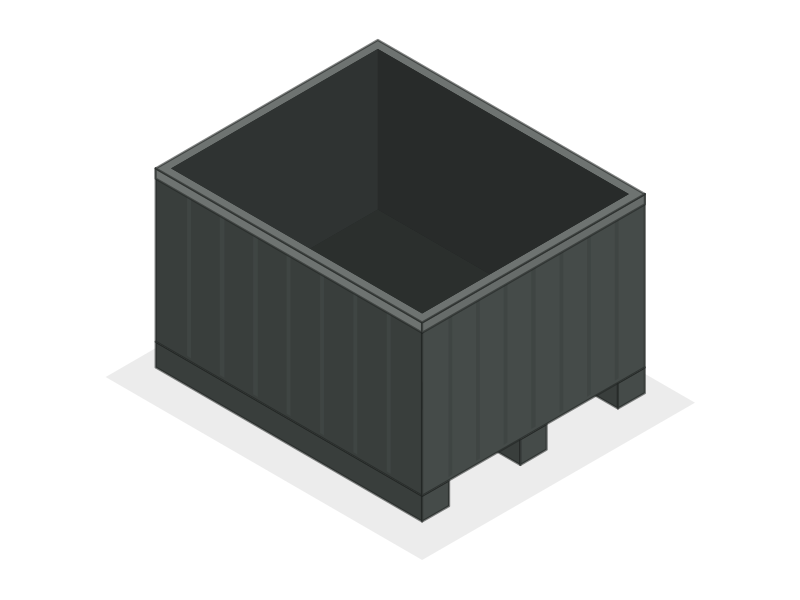
- Construction
- One piece, rigid, non-folding
- Walls
- Solid or vented
- Base
- Runners, feet or picture frame
- Always ask
- What it held before
One-piece bins and pallet boxes
One mold, no hinges. A one-piece bin has no pins, latches or folding walls to fail. That makes it tough and easy to wash, and it means the empty bin takes the same trailer space as a full one. Many nest partway when empty; check the model.
Pallet box or macro bin. Names overlap. Plants tend to say pallet box or bulk box; growers say macro bin or harvest bin. Either way it is a pallet-footprint container you move by forklift or pallet jack, often stacked several high in a yard or cooler.
Sizes vary more than the names suggest. Measure your rack bays, cooler doors, dumper cradle and truck deck before choosing, then give us outside length, width and height plus usable inside depth. A bin that is an inch too wide for a tipper or a bin filler is scrap to you, however good its condition.
Pick a one-piece bin when your bins stay on site or travel short loops. If they ride long lanes back empty, a collapsible may cost less to run.
What wears on a used bin
- Runners. The skids under the base take every forklift scrape and every drag across concrete. Look for split, ground-down or missing runners. A bin that rocks on a flat floor won't stack straight.
- Rims. The top lip locates the bin above. Chips and flattened sections let stacks shift, especially in a cold room where plastic is less forgiving.
- Corner cracks. The most common failure. Cracks start at the lower outside corners from forklift tine strikes and drops, and at upper corners from stacking stress. Hairline cracks spread under load and in freezing weather.
- Fork entry. Torn tine openings and gouged pocket edges.
- Floor. Bowing under the center, punctures, or stress whitening around drain holes.
- Sun. Chalky, faded outer walls on bins stored outdoors for years. UV-aged plastic can turn brittle.
Solid or vented
Solid walls and a solid floor keep fines, juice, brine and small parts in, and keep dust out. They suit processing, meat and seafood plants, scrap, resin and hardware. Vented walls and floors let air move through the load and let water drain, which is what fruit, vegetables and anything hydrocooled usually need.
You can't turn a vented bin into a solid one with a liner and expect the same result, and a solid bin in a forced-air cooler slows cooling. Name the product and the cooling method and we'll match the wall. Our vented vs solid guide covers the tradeoffs.
Previous contents decide where a bin can go
A bin's past use matters more than its age. Before we quote a lot we ask the seller what went in it, and we pass that on in plain words: apples, potatoes, onions, raw poultry, fish, bakery ingredients, machined parts, cutting fluid, chemicals, compost, or unknown.
Bins with oil, solvent, pesticide concentrate or unknown history are quoted only for non-food use. Bins from a produce or protein operation may suit a similar operation after washing and your QA review. We make no food-safety claim for any used bin, and the maker's own documents, if any exist for that model, are what your QA team should read. See food contact.
Cleaning
Used bins usually arrive as they left the seller: swept or rinsed at best. Some sellers pressure-wash before pickup; some lots are run through a commercial bin washer. We say which in the quote. If you need washed bins, say so up front, because it changes who we source from.
Field soil, dried pulp and labels in sleeves are normal. Mold, sticky residue, odor, or anything you can't identify is a reason to ask more questions before the truck is booked.
Lids
Lids keep birds, debris and sun off product in a yard and let a full bin carry a second one without the load pressing into the base above. Many lots arrive without them, since lids tend to scatter around a site and get broken in handling. We count lids separately and check whether they match the bin's maker and rim profile; a lid from a different model will sit loose or not at all. Matching new lids can sometimes be sourced, see dunnage and lids.
Questions
Are used bulk bins the same as macro bins?
Mostly. Macro bin is the grower and packhouse name for a large one-piece plastic bin; plants often call the same shape a pallet box. We list both under bulk bins.
Can a cracked bin be repaired?
Small cracks in some resins can be plastic-welded, but a weld seldom restores full strength at a load-bearing corner. We grade cracked bins down and say where the crack is.
Do used bins come washed?
Not by default. Each quote states whether the lot is unwashed, rinsed or commercially washed, and we can look for washed lots if you ask first.
How do I know a bin's condition grade?
Each lot gets an A, B or C with photos. What those letters mean is set out on our grades guide.