Sell used plastic crates and bulk containers
We make offers on used plastic crates, totes, harvest bins and bulk containers that a plant, farm or warehouse no longer needs. Send the type, footprint, height, count, condition, location and a few photos, and we reply with an offer or a plain no.
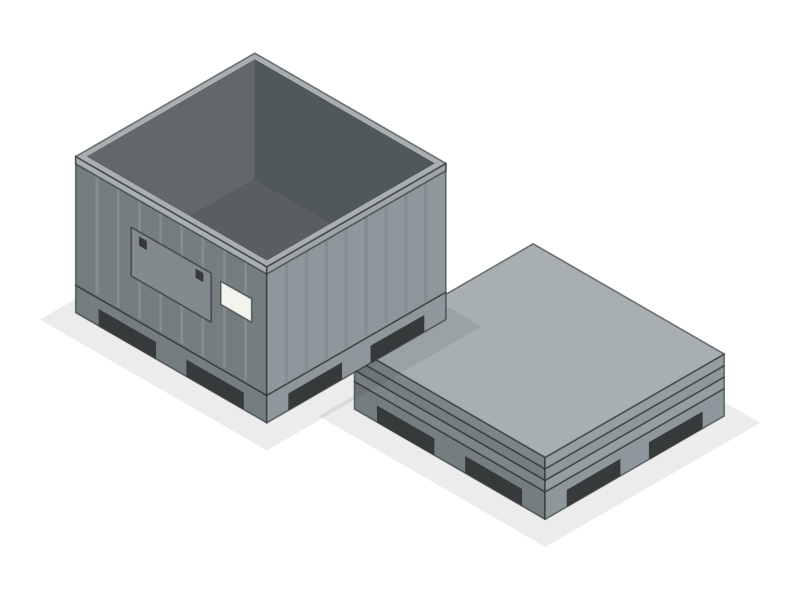
- We buy
- Collapsibles, bulk bins, macro bins, totes, crates
- Send us
- Type, size, count, grade, location, photos
- Best lots
- One model, standard footprint, truckload count
- Pickup
- Freight arranged per load
- Not bought
- Pooled or other owners' containers
-
Collapsible bulk containers
Sell retired collapsible bulk containers: what to tell us about maker, size, doors, lids, count and grade, which photos to send, and how pickup works.
-
 Harvest and macro bins
Growers and packhouses with surplus plastic macro bins: what to tell us about size, vented or solid walls, runners, count and condition, and how offers work.
-
 Totes and crates
Who buys used plastic crates and totes? We do, as do other buyers. What makes a lot of nest-stack totes, ALCs, stacking crates or euro containers sell.
-
 How selling works
How selling surplus plastic containers to us works: describe the lot, send photos, get a written offer, plan pickup, and agree payment terms in writing.
What we buy
Surplus plastic packaging that still does its job. The core of it is pallet-footprint equipment: collapsible bulk containers retired from parts programs, rigid bulk bins from processing plants, and harvest and macro bins from growers and packers. We also look at hand-held totes and crates, attached-lid containers and euro boxes when there is a useful quantity of one model.
Typical reasons a lot comes up: a vehicle or part program ended, a line moved to a different footprint, a 3PL lost the account the totes served, or a farm changed crops. Whatever the reason, the containers have value to someone running the same size, and our job is to find that buyer.
What to tell us
The worst-unit photo matters more than people expect. It tells a buyer where the floor of the lot sits, and it saves a second round of questions.
- Type and maker if you know it: folding, rigid, nesting, attached-lid. Embossed names and part numbers help.
- Footprint and height, outside, in inches. For folding units, the folded height too.
- Wall, deck and doors: vented or solid, drop doors and how many.
- Count, and whether it is one model or a mix.
- Condition in your words, or a grade: A, B or C. Note cracks, missing doors, broken latches.
- Prior contents: parts, produce, meat, chemicals. This decides who can reuse them.
- Location by city and ZIP, plus dock, forklift and loading hours.
- Photos: one of the whole stack, one close-up of a typical unit, one of the worst unit.
What moves an offer up or down
Freight is often the biggest swing. Empty containers are bulky, so the cost of moving them can eat a large part of their value on a long haul. Folding units help here, since more of them fit on one trailer. A trade column in Logistics Management put the point where return freight becomes a major cost at roughly 500 miles.
| Factor | Helps the offer | Hurts the offer |
|---|---|---|
| Footprint | 48x45, 48x40 and other common program sizes | Odd or custom sizes with few users |
| Count | A full trailer of one model | A handful of mixed sizes |
| Condition | Grade A or B, doors and latches working | Cracked corners, warped decks, missing parts |
| Storage | Indoors, folded or stacked neatly | Years in sun; brittle, chalky plastic |
| History | Dry parts or produce, disclosed | Unknown or hazardous prior contents |
| Location | Near a buyer or a busy freight lane | Remote site with no dock |
Grading your own lot
You do not need to be exact, but a rough grade speeds things up. Grade A means sound and clean, with light scuffing. Grade B means working units with stains, stickers, faded color or small repairs. Grade C means the box carries a load but has cosmetic damage, missing door pins or heavy wear. Big maker loops sort their own returns the same way; ORBIS, for instance, says it grades returned containers A, B or C by condition rather than retiring them by age.
Split the lot if it varies. Forty grade A units and ten grade C units described honestly usually beat fifty units called good, because the buyer prices the doubt.
Getting the lot ready for a truck
Sort by model and height so one stack holds one kind of box. Fold the collapsibles that fold, and nest the totes that nest; it shrinks the trailer count and often the freight deduction. Pull out units with shattered walls or missing panels and set them aside. Empty out rocks, pallet scraps, rags and old dunnage, and drain any standing water. Keep the stacks where a forklift can reach them on pickup day, and have someone on site who can count with the driver.
Ownership comes first
We only buy containers you own. Pooled crates and pallets rented from a pooling company belong to the pooler, and bins molded with another company's name usually belong to that company unless you hold a bill of sale or a written release. If you are unsure, tell us what is embossed on the wall and we will tell you what paperwork a buyer will ask for. It is faster to settle this before the photos than after the truck is booked.
Pickup and payment
When you accept an offer, both sides confirm it in writing: count, grade, price, pickup window and who loads. We arrange the carrier and send you the booking. Most sellers load at their own dock with a forklift; if you have no dock or no lift, say so up front, because it changes the truck we book. The count is checked at loading and the bill of lading is signed by both the driver and your crew.
Terms for payment are set in the written offer. We do not take containers on consignment without saying so, and we do not ask you to ship anything before the deal is agreed. The step-by-step version is on how selling works.
Questions
Do you buy damaged containers?
Sometimes. A lot with some broken units can still sell if most are sound, and refurbishers will take units with replaceable doors or latches. Send photos of the damage so we can say yes or no quickly.
How many containers do I need to sell?
There is no fixed minimum, but offers are strongest for a trailer load of one model. Small mixed lots are harder to place, especially far from buyers.
Will you buy containers that held meat or chemicals?
Tell us exactly what they held. Containers from meat and poultry plants can go back into similar uses after cleaning; containers that held hazardous material usually cannot be resold for general use, and we will say so.
Sources
Figures on this page come from these pages, last reviewed 2026-11-08. Makers update their sheets; confirm a model's figures on its current sheet before you order.