Who buys used plastic crates and totes
We buy used plastic crates and totes, and so do resellers, refurbishers, recyclers and businesses that use them directly. What gets a lot a good offer is the same everywhere: matching sets, a real count, clean boxes and little breakage.
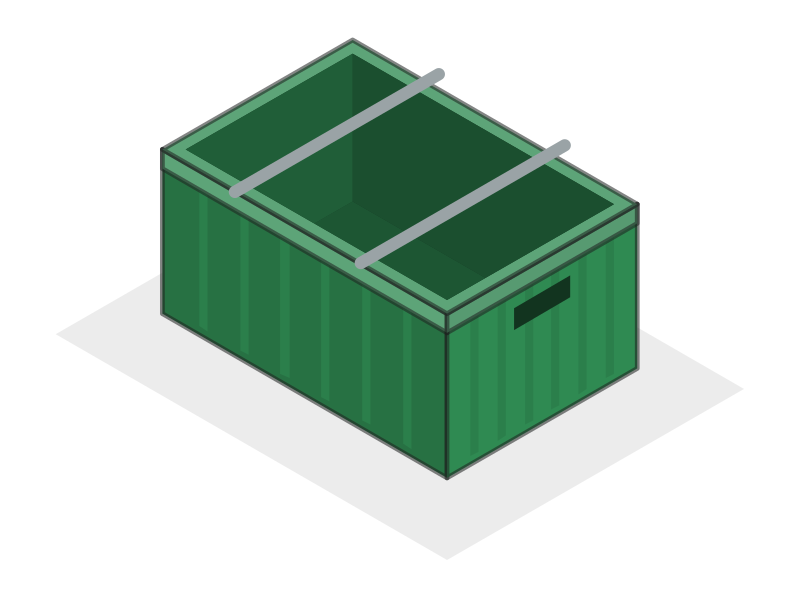
- We buy
- Totes, ALCs, stacking crates, euro containers
- Best lots
- Matching, counted, clean, unbroken
- Lot size
- Pallet quantities and up
- Ownership
- Yours to sell, not pool stock
Who buys them
Us. We make offers on surplus handheld crates and totes and resell them to buyers who need that exact size. Send details and photos and we'll answer with a number or with the reason we'd pass.
Other buyers. Packaging resellers, crate washers and refurbishers, plastic recyclers who pay for clean resin by weight, and end users such as moving companies, warehouses, farms and retailers all buy used totes. It is fair to get more than one offer. What separates them is usually freight, whether they take the whole lot, and how quickly they pay.
Lots usually surface for ordinary reasons: a warehouse relocates, a retailer changes its store-delivery system, an e-commerce fulfillment center retires its picking totes for a new conveyor, or a manufacturer moves a product line to another plant. The boxes still work. They just stopped fitting the operation that bought them.
| Buyer | Mostly wants | Tradeoff for you |
|---|---|---|
| Container reseller (like us) | Matched, reusable sets | Pays for reuse value, plans freight |
| Washer or refurbisher | Repairable or dirty but sound units | May take mixed condition, pays less |
| Plastic recycler | Clean, sorted resin by weight | Takes broken boxes, pays scrap rates |
| Direct end user | A specific size, often small counts | Can pay well but rarely takes everything |
What makes a lot worth an offer
- Matching sets. Several hundred of one model sell far more easily than mixed boxes, because buyers need them to stack, nest and fit their shelving together.
- Real counts. "About a trailer" is a start; a count by type is what gets a firm price.
- Clean. Empty, swept, labels mostly off. Food residue, grease and tape lower the value and sometimes the pool of buyers.
- No breakage. Cracked handles, split corners and missing lid flaps get culled. A lot with few rejects is worth more per box.
- Clear ownership. Many crates are owned by a pool or a supplier and stamped with their name. If yours are, check before you sell.
Nest-stack totes
Nest-stack totes turn or flip so they nest inside each other empty and stack when full. Nesting matters most here: a used tote that won't nest because of a warped wall loses most of its appeal. Tell us the outside size, the depth, whether they have stacking bars or rotate-to-stack lugs, the color, and whether hinged lids or dollies come with them. See nest-stack totes for the types.
Attached-lid containers
Attached-lid containers, or ALCs, have two hinged lid flaps that close to form a stackable top and open so the empty boxes nest. Distribution and retail chains use them for store deliveries and returns. Buyers check that both flaps are present, that hinge pins hold, that the lids interlock when closed, and that security tie holes aren't torn. Count any boxes with a missing or broken flap separately. More on the design at attached-lid containers.
Stacking crates and euro containers
Stacking crates have straight walls and don't nest, so they take the same space empty and full. They stack high and suit parts, bakery, dairy and produce work. Interlocking rims and straight, uncracked walls are what buyers look for. See stacking crates.
Euro containers are rigid, straight-walled boxes built on metric footprints that divide a pallet evenly, popular in automotive and manufacturing. Sets in one size and height sell best, and their solid bases and reinforced corners usually hold up well. Tell us the length and width in millimeters or inches and the height. See euro containers.
Other handheld crates we look at
Collapsible handheld crates fold flat for the return trip; check that every wall clicks upright and the hinges aren't stress-whitened. Many produce crates of this style circulate in rental pools, so confirm they're owned outright. See collapsible crates.
Produce and bakery crates, ventilated picking lugs and shallow trays sell when matched and clean. Dairy cases and bottle crates are the classic ownership problem: most carry a dairy's name and are not for resale by anyone else. Picking totes from automated warehouses can be valuable to other sites running the same system, if the barcode labels come off and the bottoms aren't worn flat from conveyor belts. See produce crates.
What to send us
A short description and a few phone photos are enough for a first answer: crate type, outside size and height, count by type, color, any molded maker or owner name, condition, what they held, where they are, and whether there's a dock. Photos of a stack, a single empty crate, the underside and the worst damage cover most questions. Then follow how selling works for offer, pickup and payment.
Questions
Who buys used plastic crates near me?
We buy nationwide and plan pickup per lot, so location affects freight but doesn't rule you out. Local resellers and recyclers may also buy, and it's worth comparing.
What are used plastic totes worth?
It depends on model, count, condition and where they are; we don't publish a price list. Matched, clean, unbroken sets in a common size bring the most.
Do you buy small quantities?
A few dozen totes rarely cover freight. We look at pallet quantities and up, and we'll tell you honestly if a lot is too small to make sense.
Can I sell crates with another company's name on them?
Only if they are yours. Many branded crates belong to a pool or a supplier. If you bought them, have a record; if not, check with the named owner first.
What happens to totes too broken to reuse?
They are usually shredded and granulated for recycling. Most crates are polyethylene or polypropylene, often marked with a resin code underneath, and recyclers prefer them sorted by resin and free of metal parts.