Plastic crates and bulk bins in Oklahoma
Oklahoma buyers ask us mainly for washable combo bins and lidded totes for pork and poultry plants, plus folding bulk containers for the Tulsa river port and I-35 and I-40 warehouses. We quote new, used and refurbished containers to Oklahoma addresses, and every load's freight is priced separately.
- Pork
- Seaboard Foods, Guymon
- Livestock
- 4.65M cattle, 1.98M hogs
- River port
- Tulsa Port of Catoosa
- Main interstates
- I-35, I-40, I-44
- Cities
- Oklahoma City, Tulsa, Guymon
Hogs in the Panhandle
Out in Guymon, Seaboard Foods runs a pork plant on two shifts that processes about 18,000 hogs a day with about 2,300 workers. Statewide, USDA NASS counted 1.98 million hogs on December 1, 2025 and 4.65 million cattle on January 1, 2026. Pork and beef processing on that scale uses a lot of plastic.
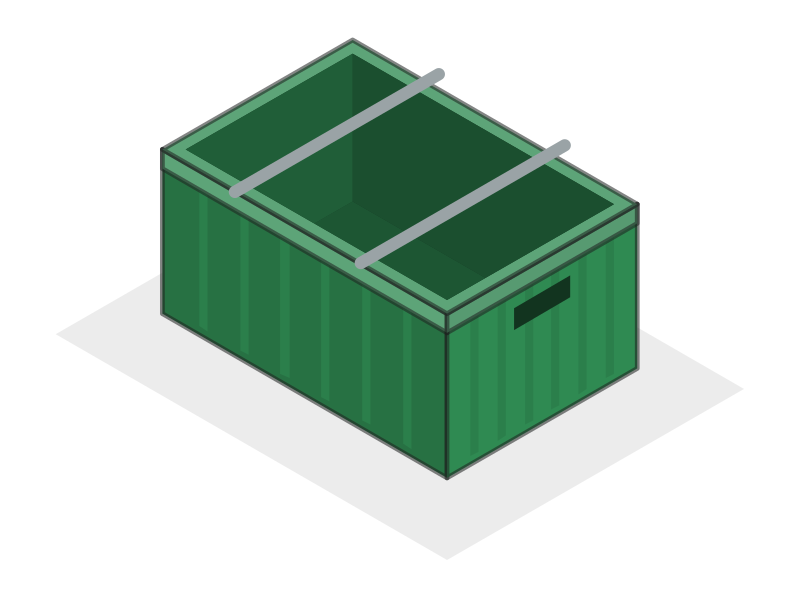
The containers are specific. Trim and primal cuts go into solid-wall combo bins that sit on a pallet-style base; smaller cuts ride in meat lugs and stacking crates that nest when empty. Smooth inside corners, no pockets that trap water, and resin that tolerates hot washdown and cold rooms are what buyers check. Colors often mark product or allergen lines.
Food contact and used bins
A used container that's going near meat needs more scrutiny than one bound for a warehouse. We never call a used box food-grade. Ask the original maker for its resin and compliance documents, tell us what the bin carried before, and let your food-safety lead decide. For many plants, refurbished bins that were cleaned and inspected are an acceptable middle ground; for others only new will do. Our food contact guide lays out the questions to ask.
Refurbishing usually means the bins were pressure-washed, old labels scraped off, cracked runners or hinges replaced, and each unit sorted by color and model. It doesn't change the resin or erase what a bin carried years ago, so the history question still stands.
How many containers a two-shift plant needs
Buyers often underestimate the fleet. A container is rarely in just one place: some are on the line, some are full in the cooler, some are in the wash, some are on a truck to a customer and some are waiting to come back. Counting only the boxes on the line leaves a plant short by the second shift.
A simple way to size it: estimate how many containers fill per hour, multiply by the hours each one spends away from the line before it returns clean, and add a margin for damage and loss. Plants running two shifts, like the one in Guymon, turn containers fast, so the wash and return loop drives the number more than the line rate does. Tell us your figures and we'll quote a count that covers the whole loop, not just the first day.
Oklahoma container requests
| Sector | What they order | Footprint |
|---|---|---|
| Pork and beef processing | Solid-wall combo bins, meat lugs, lidded totes | 48x40, about 24x16 |
| Broiler processing | Washable stacking crates, bulk bins | Hand-held, 48x40 |
| Tulsa Port of Catoosa and river freight | Collapsible bulk containers, bulk bins | 48x40, 48x45 |
| Oklahoma City and Tulsa DCs | Nest-stack totes, attached-lid containers | Hand-held |
| Wheat farms, elevators and seed dealers | Solid totes, bulk bins for seed and samples | 48x40 |
Tulsa's river port and the interstates
The Tulsa Port of Catoosa covers about 2,500 acres and is Oklahoma's largest port, one of the farthest-inland river ports in the country, at the head of the McClellan-Kerr Arkansas River Navigation System. Barges handle bulk cargo; the containers we quote move by truck from the warehouses and manufacturers around it.
Three interstates carry most of that freight. I-35 runs north from Texas through Oklahoma City to Kansas. I-40 crosses east to west through Oklahoma City toward Arkansas and New Mexico. I-44 angles from Lawton through Oklahoma City and Tulsa to Missouri. Guymon is far from all three, out on US highways in the Panhandle, so we quote freight there as its own lane.
Order size picks the method. A few pallets of totes ship LTL. A plant ordering combo bins or collapsibles by the dozen should price a full trailer; see our trailer loads guide.
Broiler plants also buy shipping crates for iced or chilled product and nestable trays for further processing. Hatcheries and grow-out farms rarely buy bulk bins, but feed mills serving them use solid totes for premix, vitamins and spill recovery, and they prefer bright colors that flag contents at a glance.
Wheat and broilers
Wheat was Oklahoma's top grain crop in 2025, worth about $500 million in value of production, and the state produced about 181.3 million broilers. Grain moves loose, but elevators and seed cleaners still buy solid totes and bins for samples, screenings and bagged seed. Poultry processing adds demand for washable stacking crates that nest when empty to save space on the return.
Selling surplus from Oklahoma
We buy reusable combo bins, collapsibles and totes in volume from Oklahoma plants and warehouses. Send the count, size, condition, where they sit and what they held. Pickup is quoted as a separate load. Start at sell.
Questions
Do you quote delivery to Guymon and the Panhandle?
Yes. We quote freight to any Oklahoma address. Remote lanes can cost more per mile, so a fuller load often makes sense.
What bin do pork plants usually ask for?
Most ask for a solid-wall combo bin on a 48x40 base with a smooth interior. We confirm the maker's rated load and temperature range before quoting.
Can I sell combo bins that held meat?
Often, yes. Tell us how they were cleaned and stored. Their next use depends on that history.
Can you quote containers for barge-side warehouses at Catoosa?
Yes. We quote truck delivery to warehouse addresses around the port, like anywhere else in Oklahoma.
What's the cheapest way to restock a few dozen lugs in Tulsa?
Usually an LTL pallet of nested lugs. Unit freight is higher than on a full truck, but the total bill is lower for a small reorder, and shrink-wrapped pallets travel cleanly through terminals.
Sources
Figures on this page come from these pages, last reviewed 2026-11-08. Makers update their sheets; confirm a model's figures on its current sheet before you order.