Plastic crates and bins for food processing
Food processing plants run solid-wall bulk bins for ingredients and in-process product, intermediate bulk containers for liquids and flowables, foldable large containers for inbound supply, and stack-nest or straight-wall totes along the line. In a food plant a container is judged by three things: how it cleans, whether its resin is documented for food contact, and whether it fits the dumper.
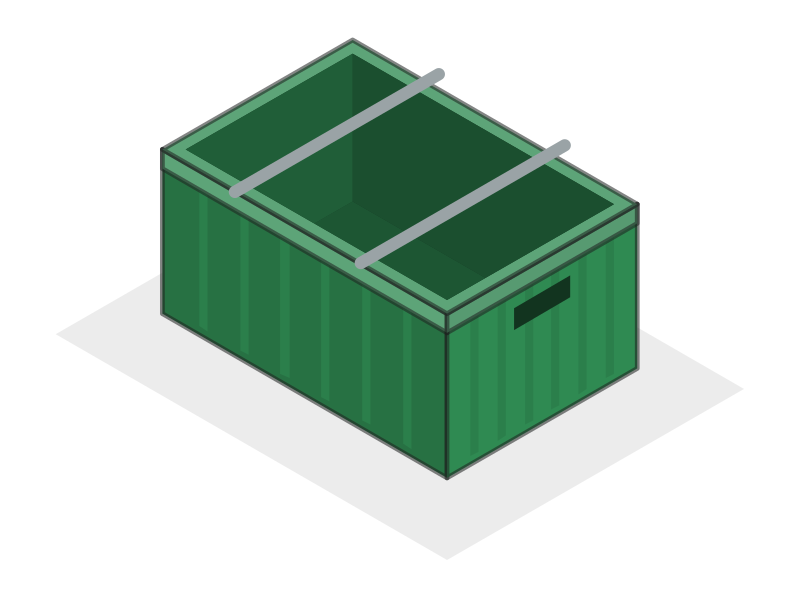
- Containers
- Solid bulk bins, IBCs, foldable large containers, hand-held totes
- Footprints
- 48x40, about 45x48, 1200x1000 mm, 600x400 mm
- What goes in
- Dry ingredients, syrups, trim, brine, in-process and finished product
- Rules to know
- 21 CFR 177.1520 for olefin resins; your sanitation SOPs
Where containers work inside a food plant
Ingredients arrive at the receiving dock in totes, IBCs or bins. They are staged by line, tipped into a hopper by a dumper, and the product that comes out moves between steps in hand-held totes or solid bins before it is packed. Some of it sits in a cooler or freezer on the way. Every hand-off is a chance for dust, splinters or residue to reach food, and that is the argument makers make for plastic over fiber and wood.
ORBIS makes that case plainly: it says moving away from fiber-corrugated cases "eliminates dust", and that plastic pallets prevent downtime caused by wood chips lodging in equipment. It sells reusables with ventilated walls and open decks so they clean easily and dry fast, including HDR4048 bulk bins at 47.2 x 39.4 in. and 34.3 or 25 in. tall.
The dumper is the fussiest piece of equipment on the floor. Send us its cradle width, clamp style and the rim or lip profile it grabs, and we match bins that seat properly instead of guessing by footprint.
Bins, IBCs and totes by job
| Container | Used for | Footprints | Notes |
|---|---|---|---|
| Solid one-piece bulk bin | Meat, seafood, pickling, brining, fermenting | About 45x48 | IPL's MacroBin 34 Solid / ProBin 34-S is about 1,137 x 1,226 x 880 mm and stacks 8 high. |
| Double-wall solid bin | Refrigerated or frozen product | 39.0 x 46.75 in. | IPL MacroBin 44 Solid, 42.38 in. tall, with fitted lids offered. |
| Tall fixed-wall bin | Processing and storage | 48x48 | IPL MacroBin 48 Solid, 53.0 in. tall. |
| Rigid IBC | Liquids and flowables | 48x44 | Buckhorn Caliber: 315 gallons, stacks up to five high with 3,300 lb of product. |
| Foldable large container | Inbound fruit for aseptic processing | Metric pallet base | IPL claims a 73% folding ratio for its Combo Fructus. |
| Bulk bin | Ingredients and in-process product | 48x40 | ORBIS HDR4048 series, ventilated or solid options. |
| Stack-nest tote | Line-side moves of portions and parts | 600x400 mm | ORBIS GS6040-27 is "Available in FDA-approved material". |
Food-contact resin, and what washing looks like
The federal rule for polyethylene and polypropylene in contact with food is 21 CFR 177.1520, Olefin polymers. It says the listed polymers "may be safely used as articles or components of articles intended for use in contact with food", subject to the rule's specifications. Makers then describe their bins in their own words, and we quote those words rather than add our own claim. IPL Schoeller states: "All food-grade resins we use are FDA-approved and naturally BPA-free." Buckhorn says its IBCs are "Molded of FDA-compliant materials".
Cleaning is your plant's step, run under your SOPs. The Reusable Packaging Association says reusable food containers are made mainly of PP and HDPE and are cleaned and sanitized between uses with industrial wash procedures; as an alternative to chemicals, heat sanitation runs at 160 to 180°F, and tunnel washers handle 6,000 units an hour or more. For its solid one-piece bins, IPL suggests "a high-pressure wash or nonabrasive brush".
Check the container's listed temperature range against your wash, freezer and blast cell before you commit.
New or used, and the food-contact question
For anything that touches exposed product, plants often specify new containers in documented resin, because the paperwork follows the part number. Used bins can still be the right call for packaging materials, sealed ingredients, waste streams or dry storage. When a used lot comes from food service, we tell you what it held as far as we know: brine, oils, allergens, nothing at all. When we don't know, we say that too.
Never take a reseller's word that a used container is food safe, ours included. Ask for the maker's documents for that model, and run it through your own wash and sanitation before it sees product. If you want bins cleaned before they ship, say so in the request; it depends on the lot and where it ships from. See food contact for the long version.
Folding containers earn their price on the empty trip. ORBIS lists its BulkPak GP4048-34 at 34.1 in. tall and 13.5 in. collapsed, a 2.7:1 return ratio, 90 assembled or 240 folded per 53-foot trailer. If your bins come back from a co-packer across the country, that ratio matters; if they never leave the building, a rigid bin is simpler.
Selling surplus bins from a plant
Plants that change dumpers, retire a product or switch to a new bin height often hold dozens of good containers. We buy them. Tell us the maker and model, count, condition, any lids, and what the bins carried, including allergens and chemicals. That history decides who can reuse them. Start at sell your containers.
Questions
Are these bins made from FDA-compliant resin, and can you document it?
We quote the maker's own statement for each model and ask the maker for its documents when you need them. We don't certify containers ourselves, and we never call a used bin food safe.
Will the bin fit our dumper or tipper?
Send the dumper's make, cradle size and the rim profile it grips. Footprint alone is not enough, since lips and runners differ between makers on the same nominal size.
Solid or vented, single or double wall, for refrigerated or frozen product?
Solid walls keep liquid and fines in; vents help air and water through. IPL sells its double-wall MacroBin 44 Solid for refrigerated or frozen products. Confirm any model's listed temperature range.
Do collapsible bulk containers cut return freight enough to justify the price?
When empties travel far, often yes; on a short loop, rarely. Compare the return ratio and trailer counts for the exact model against your lane.
Sources
Figures on this page come from these pages, last reviewed 2026-11-08. Makers update their sheets; confirm a model's figures on its current sheet before you order.