Plastic crates and bins for beverage
Bottlers and drink makers run low-profile reusable shells and bottle crates on direct store delivery routes, intermediate bulk containers and bulk bins for syrups and dry ingredients, and 44x56 pallets with layer pads and top frames. A shell is sized to one bottle and one route: it carries a layer of product to the store and rides back empty for another trip.
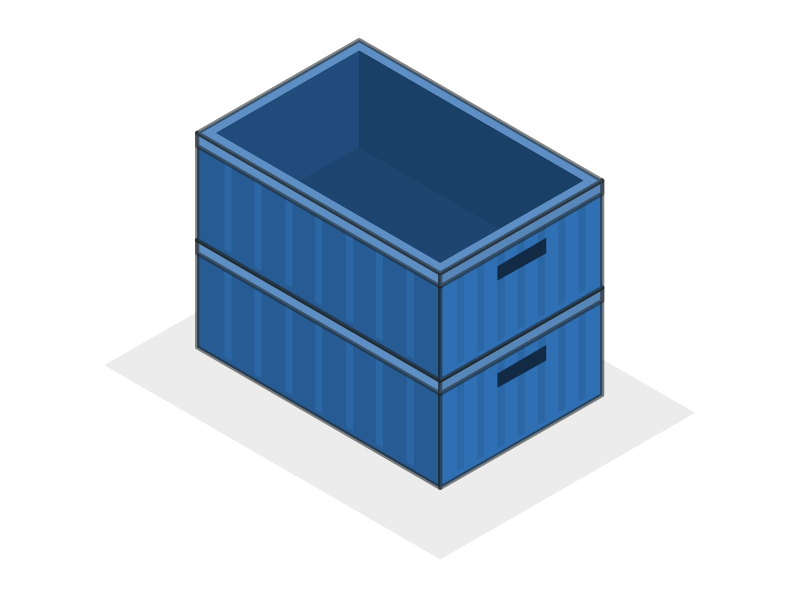
- Containers
- Beverage shells, bottle crates, IBCs, bulk bins, layer pads
- Footprints
- Shells about 18.5 x 12.3 in.; 44x56 pallets; 48x44 IBCs; 48x40 bins
- What goes in
- 20 oz, 1 L and 2 L bottles; syrups, concentrates, sugar
- Rules to know
- Food-contact resin for ingredient containers (21 CFR 177.1520)
Out on the route, back to the bottling plant
Finished bottles leave the line in shells or crates, are stacked on pallets with layer pads and a top frame, and go out on route trucks. The driver hand-trucks shells into the store, and the empties come back on the same truck. ORBIS's BEV20C shell is a good picture of the format: it holds 24 20-ounce bottles, measures 18.5 x 12.3 x 4.6 in., weighs 1.7 lb, and serves stores, food service, vending and hospitals.
The other half of a beverage plant is inbound. Syrups, concentrates and liquid sweeteners arrive in IBCs; dry ingredients in lined bulk bins. Buckhorn's Caliber IBC is 48 x 44 in., holds 315 gallons and stacks up to five high carrying 3,300 lb of product. IPL Schoeller's Combo Life foldable IBC comes in 285- and 65-gallon volumes, and its hopper dispensers for beverage lines are, in IPL's words, "Designed for direct food contact".
Wineries and cider makers sit at the edge of this trade. IPL Schoeller sells its solid one-piece MacroBin 34 for fermenting wine, among other jobs, so small-lot red fermentation and fruit receiving at the crush pad can use the same bins a packhouse would. Rehrig Pacific, for its part, says it has designed beverage secondary packaging since the early 1950s, with a range that includes "beverage shells, castle crates, trays, and pallets".
Shells, crates and bulk containers for drinks
| Container | Used for | Footprints | Notes |
|---|---|---|---|
| Reusable beverage shell | Bottles on store delivery routes | About 18.5 x 12.3 in. for 24 x 20 oz | Low-profile, so the bottles take much of the stack load. Match shell to bottle. |
| Bottle crate | Glass or heavier bottles, returnables | Per bottle and count | IPL says its crates are "made to last over 10 years". |
| Rigid IBC | Syrups, concentrates, liquid sugar | 48x44 | Buckhorn: "Molded of FDA-compliant materials". |
| Foldable IBC | Liquid ingredients on long lanes | Pallet base | IPL Combo Life, 285 or 65 gallons. |
| Bulk bin | Dry ingredients, closures, preforms | 48x40 | Fixed-wall or collapsible; ask for a lid. |
| Pallet, layer pad, top frame | Unitizing shells and cases | 44x56 | ORBIS lists "standard 44" x 56" pallets, layer pads and top frames". |
Trip counts, washing and service life
Reusable shells earn their keep in trips. In a Wis-Pak case study that Rehrig Pacific cites, shells "lasted 100+ trips" and saved significant money against one-way packaging. Crates last longer still in IPL Schoeller's telling, at over ten years. Treat both as maker figures: route abuse, sun, and how drivers handle empties change the real count.
ORBIS describes its BEV20C as "Easily cleaned and sanitized" and stresses that plastic has "no nails, rust, or splinters", which is the case against wood pallets in a bottling hall. A plant that washes shells often does it in a tunnel washer between trips; drain holes and open corners decide how dry they come out.
Ingredient containers raise a separate food-contact question. 21 CFR 177.1520 is the FDA regulation covering olefin resins such as polyethylene and polypropylene in food-contact articles. Makers state how their IBCs and bins relate to it, and we relay that wording unchanged rather than certify anything ourselves.
New shells, used crates and the ingredient side
Shells are close to custom. A 20 oz shell won't carry 1 L bottles, and ORBIS makes separate packaging for 1-liter, 2-liter, 20-ounce and 390/500 mL bottles. New orders can carry the bottler's colour and logo so retailers send them back. Used shells are worth a look when a lot matches your bottle exactly and the previous owner's branding is acceptable on your route, or when they run only inside your own plant.
Inspect used shells pocket by pocket. Split bottle pockets, cracked handholds, worn interlocking lugs and bowed bases mean a stack that leans on a hand truck. Sun-faded plastic turns brittle, and another brand's hot-stamped logo may not be welcome on your route.
For IBCs and ingredient bins, ask what the container held before, every time. A used IBC from a syrup plant and one from an industrial cleaner look the same on a pallet. We tell you the history we know, and we say so when we don't. For direct food contact, many plants buy new against the maker's documents and wash before first use. See food contact and buying new.
Bins on the 48x40 footprint match the GMA-style pallet base, so they unitize alongside ingredient loads already on it.
Selling shells and crates when packaging changes
A new bottle shape or a move to shrink-wrapped cases can idle a whole shell fleet. We buy surplus shells, crates and bulk containers. Send counts by model, the bottle each one carries, condition, branding, and where they sit. Rehrig calls its beverage products 100% recyclable, so even shells too worn for another route may still be worth a quote. Start at sell totes and crates.
Questions
Which shell or crate fits our bottle size?
The one built for it. Send the bottle size, count per shell and base diameter; a 20 oz shell and a 2 L shell are different molds.
How many trips will a reusable shell last?
Rehrig cites a Wis-Pak case study where shells lasted 100+ trips. Your number depends on route handling, so treat that as a reference, not a promise.
Do you have food-grade IBCs or bulk bins for syrups and dry ingredients?
We quote IBCs and bins whose makers state food-contact materials, and give you their exact wording and documents. We don't call any container food grade on our own say.
Can crates carry our logo or colour?
On new orders, yes, within the maker's options. Branding helps shells find their way back from retailers.
Will you buy back shells or crates when we change packaging?
Yes. Counts by model and a pickup location start the quote.
Sources
Figures on this page come from these pages, last reviewed 2026-11-08. Makers update their sheets; confirm a model's figures on its current sheet before you order.