Plastic crates and bins for seafood
Seafood moves in insulated fish tubs with a polyurethane foam core, from about 300 to 1,000 litres, in triple-wall polyethylene bins, in solid bulk bins for brining, and in smaller totes packed with ice. Temperature is the job: FDA guidance sets limits, counted in hours from death, for chilling fish that can form histamine, so the container must hold ice or slurry, drain, and stand up to salt.
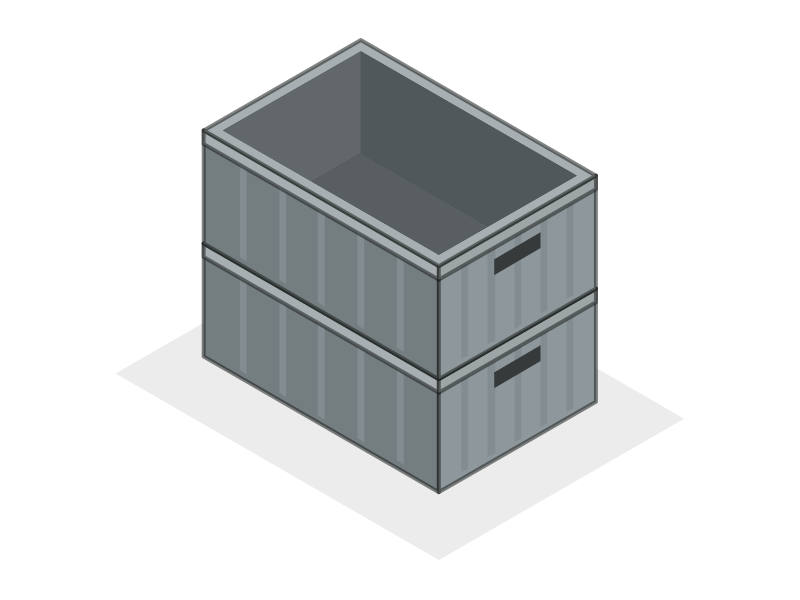
- Containers
- PUR-insulated tubs, triple-wall PE bins, solid bulk bins, iced fish totes
- Sizes
- About 300 to 1,000 L tubs; solid bins near 45x48
- What goes in
- Whole fish in ice or slurry, lobster crates, brine, tray packs
- Rules to know
- FDA Fish and Fishery Products Hazards guide, chapter 7
Boat, dock, plant: where a fish tub travels
On deck the catch goes straight into an insulated tub of ice or slurry. Sæplast describes its 460 PUR as an "Ideal on-board handling container". At the dock a forklift lifts full tubs onto a truck, and at the plant they are dumped, rinsed and sent back to the boat. The tub that leaves the dock often returns within days, salty and scuffed, which is why owners care about drainage, rim strength and how easily the shell rinses clean.
Larger tubs carry the run to the processor. Canadian Packaging reported in July 2019 on Sæplast's DXS335, a 1,000-litre tub measuring 122 x 109 x 119 cm, with a double-wall shell of what Sæplast calls 100% food-grade polyethylene around a polyurethane core. Filled with slurry ice, it keeps fish at the right temperature on the way to the plant. Live and fresh shellfish get their own fit: Sæplast's D505 holds two lobster crates "with room for ice".
Seafood containers and sizes
| Container | Used for | Size range | Notes |
|---|---|---|---|
| PUR-insulated fish tub | On-board chilling, dock to plant | About 300 to 1,000 L | Foam core slows ice melt, Sæplast says. |
| Triple-wall PE bin | Iced fish where insulation isn't needed | Similar litre range | Sæplast lists triple-wall PE in its seafood range. |
| Lobster tub | Lobster crates in ice | Sized to two crates | Sæplast D505. |
| Solid one-piece bulk bin | Brining, pickling, bulk seafood | About 45x48 base | IPL markets its MacroBin 34 Solid for meat or seafood and for brining. |
| Case-ready basket | Seafood tray packs to retail | 24x20 | ORBIS lists seafood among tray packs its baskets carry. |
| Lids | Covering iced loads, stacking | Per tub model | Lids are model-specific; give us the tub. |
Chilling deadlines, ice checks and cleaning
Chapter 7 of FDA's Fish and Fishery Products Hazards and Controls Guidance deals with scombrotoxin, the histamine hazard in fish such as tuna and mackerel. For fish exposed to air or water above 83°F, it calls for placing them in ice, or in refrigerated seawater, ice slurry or brine at 40°F (4.4°C) or less, within 6 hours of death. Fish exposed at 83°F or less get 9 hours, and fish gilled and gutted before chilling get 12 hours. Those clocks are why boats run insulated tubs, not open crates.
At receiving, the same chapter calls for visual checks of ice adequacy in a representative number of containers ("e.g., cartons and totes") from throughout the shipment, and for fish to be "completely surrounded by ice at the time of delivery". A tub that is too deep for its ice load, or that leaks melt and leaves the top layer dry, makes that check harder to pass.
On cleaning, Sæplast says its non-porous polyethylene is easy to clean. IPL says the smooth surfaces of its solid bins clean with a high-pressure wash. Flush salt out of drain plugs and lid seals after every trip; dried brine crusts collect bacteria and stop lids seating.
Insulated or not, new or used
We can't give one hold time for an insulated tub. It depends on the fill, the ratio of ice to fish, the lid, the sun on the dock and the length of the run, and makers don't publish a single figure that covers all of it. What insulation buys is margin: less melt per hour, so the fish stays surrounded longer. A non-insulated triple-wall bin suits short dock-to-plant hops.
Measure before you order: the hatch opening and hold depth on the boat, deck crane or winch limits, fork pocket spacing on your trucks, and the dumper or tipper on the processing line. Litre size follows from those numbers, not the other way round. Stacked tubs also have to clear the cooler door and the reefer trailer's ceiling.
Used insulated tubs need a careful look. Sæplast says its PE containers typically last "around 12-15 years", but a cracked shell lets water into the foam. Weigh a sample against the maker's listed tare; a waterlogged core is heavy. Check for soft spots, bulges, split welds and missing drain plugs. Ask the maker about brine and salt exposure for any model. On food contact, we quote what the maker states and tell you what we know of a tub's past use; we don't call a used tub food safe.
Selling surplus tubs, and getting yours back
Tubs go missing on loose return loops. On new orders, ask about molded-in names or numbers so buyers' docks send them home. When a fleet is replaced or a boat is sold, we buy the old tubs: send the maker, litre size, count, condition, and the port or plant where they sit. Coastal states such as Washington and Louisiana have their own pages. To sell, see sell your containers.
Questions
How long will an insulated tub hold slurry ice?
There is no single number. Fill, ice ratio, lid, ambient heat and trip length all change it, so we quote the tub and let you test against your own run.
What litre sizes fit our boat hold, forklift and processing line?
Send hatch and hold measurements, fork pocket spacing and your dumper type. Tubs run from about 300 to 1,000 litres, and the smallest fit is often a hatch, not a hold.
Do the tubs drain, and can they take brine and saltwater?
Many fish tubs have drain plugs; confirm on the model sheet. Ask the maker about brine and saltwater use for that model before you commit.
How do you check a used insulated tub's foam core?
We look for cracked shells, bulges and soft spots, and weigh against the listed tare, since a wet core is heavy. Tell us how you plan to use the tubs.
Can tubs be branded or tracked so they come back from buyers?
Yes, on new orders: ask about molded-in lettering, serial numbers or a recess for a tag. Painted names wear off quickly in saltwater service.
Sources
Figures on this page come from these pages, last reviewed 2026-11-08. Makers update their sheets; confirm a model's figures on its current sheet before you order.